Food Memories – Chicken Pot Pie

Today’s Food Memory comes from fellow Big Summer Potluck attendee Jennifer of Bread and Putter.  I had no way of knowing at the time that Jennifer and I would become bff’s on Twitter (@breadandputter).  Don’t tell The Mistah but I think she knows more about me via my twittering than he does after 6 years of marriage.  Is that bad?

Here’s a little of what Jennifer has to say on her About page:

My early cooking adventures were kind of pathetic.  I once cooked a hot dog in a frying pan that was burned on the outside and still frozen in the middle.  I could always bake – I can follow instructions pretty darn well, but cooking always seemed a little more loosey-goosey. There are things about cooking apparently you are just supposed to know instinctively or something, and I didn’t.

Yeah, I can totally understand that.  Maybe she and I are kindred kitchen spirits.

If you still need another reason to skip on over to Bread and Putter and check out what’s going on in Jennifer’s kitchen, I give you this:

I really love cheese and bacon. I hate coffee, Swiss chard, Brussels sprouts, beets and anything that leaves orange cheese powder on my fingertips. Dark chocolate is the best chocolate but milk chocolate is good too if there’s peanut butter in it.  There’s nothing quite like hot crusty bread fresh out of the oven with some good butter on it.

I’m going to pretend that she didn’t include coffee, brussel sprouts, beets, and cheetos on her list of dont’s.

Chicken Pot Pie

For our second date, my now husband invited me to his house for dinner. I didn’t know what to expect.  I arrived with a bottle of wine in hand but he didn’t have any wine glasses. So, we drank it out of regular glasses but in retrospect, who was I to judge? It was white zinfandel.

When it was time for dinner, I was impressed when his creation came out of the oven – a homemade chicken pot pie! This guy was racking up points fast! For our first date, he had invited me to a play.  Classy, right?  And then he bakes up a pie for me. What wasn’t to like? When he cut open the pie and served me a slice, my excitement waned a bit. In addition to the chicken and gravy, there was a lot of broccoli in the pie. At the time, I really was not a broccoli fan.  And all I could taste in that pie was broccoli. But, I was gracious and I ate up my whole serving and I complimented him on that pie.

I would later learn that the pie dough was from a box and the gravy was from a can, but I still give him lots of credit for that pie.  There was still a lot of measuring, preparation and assembly involved. As the years passed and I confessed my non-love of broccoli, the pie took on other incarnations with carrots and peas replacing the wretched broccoli.

And then a funny thing happened. He was a single father and was doing his best to put food on the table for his two daughters and trying to set a good example. So, in turn, when I was dining with them, I tried to set a good example and not be fussy and eat what I was served. And over time, my palate grew in an unexpected way.  I learned to like, if not tolerate, just about everything. Including broccoli! These days we even grow broccoli, in our garden at our home together.

Here is his original chicken pot pie recipe. These days I usually make my own crust and my own gravy if I am making it, but I promise, it is still pretty darn good with the boxes and the cans.  And if you make it for someone else with love, isn’t that what really counts?

B&P Note: I’ve transcribed this exactly as written. It amuses me.

2 boxes –total of 4 Pillsbury or whatever pre-made pie crusts. Take out 15 mins before using

2 ¼ + lbs boneless breast of chicken, trim crap off – cut up, refrigerate

2 medium potatoes diced

1 bunch + broccoli crowns, trimmed of most of stem

3 or 4 carrots cut up diced


Boil veggies till soft (nothing falling apart.) Strain.

Open 2 cans Franco-American chicken gravy – cook till hot.

While cooking gravy, prepare two pie shells in pans.

Throw in chicken & veggies into hot gravy. Mix. Fill pies. Cover pies with remaining pie crusts. Baste with butter. Slit pie crust tops to vent heat before putting in oven. Cook covered in preheated 425 degree oven 20 mins. Remove foil cover & cook 25 mins more. Remove & let sit a minute before cutting.

Mr. Bread and Putter’s Chicken Pot Pie

BAH Note: I have to admit that I didn’t exactly recreate the original incarnation of Mr. B&P’s chicken pot pie. I was short on supplies and had a pie crust that was well past its prime.  My loosey-goosey version went something like this:

  • 1 rolled pie crust (premade)
  • 1 jar chicken gravy
  • 1 teaspoon cornstarch
  • frozen peas and carrots
  • diced rotisserie chicken (without the skin)

Heat oven to temperature called for on the back of the box of pie crust.

Combine gravy and cornstarch in a medium saucepan set over medium heat.  Bring to a boil, stirring occasionally, until the gravy has thickened.  Add the peas, carrots, and chicken and stir to combine.

Transfer the filling to a 9 inch pie plate.  Top with the pie crust, crimping the edges as you go.  Cut four small slits in the top of the dough for steam to escape.  Place on a sheet pan and bake until the filling is bubbly and the top has browned.

If the edges of the crust are browning too fast, cover them with a ring of aluminum foil.

{printable recipe}

Lemony Seafood Pasta Salad

This winter has been especially frightful.  I can’t even begin to image what it has been like for people living in the midwest or northeast who have been utterly beaten down with snow.  I survived Snomageddon 2010 and know the misery that comes when the forecast calls for accumulations measured in feet instead of inches.  Y’all have my sympathies.

While I can’t personally help you dig out from Snowpocalypse 2011, I can offer you a recipe that will have you imagining a land of picnics and potlucks, warm breezes and sunny skies, and flip flops and halter tops.

Don’t forget to take along some imaginary sunscreen.

Lemony Seafood Pasta Salad

Adapted from Pam Anderson’s Perfect One Dish Dinners

BAH Note:  If you showed up to a potluck at my house with this dish, you would earn a special place in my heart.  I kept tweaking the dressing because the lemons I used were extremely sour.  I had to add agave nectar to balance the extreme puckering produced by my produce.  Feel free to add a minced clove of garlic to the dressing to turn up the flavor. And if you like your dressing with more olive oil, add it.  I purposely scaled the olive oil down to suit my tastes (Pam’s recipes calls for 1/2 cup).

BAT Tip: When you cut up the raw shrimp, you want the pieces to be approximately the same size as the scallops so they cook in the same amount of time. And yes, as unconventional as it may seem to cook your seafood with your pasta, it works beautifully.

  • 3 tablespoons fresh lemon juice
  • 2 tablespoons dijon mustard
  • 1 tablespoon rice wine vinegar
  • 1/4 cup olive oil
  • 1 pound small pasta
  • 1/2 pound bay scallops
  • 1 pound raw shrimp, peeled, and cut into bite size pieces
  • 1 pint grape tomatoes, cut into halves
  • 7 ounces feta cheese, crumbled
  • dried oregano

In a small bowl, whisk together the lemon juice, mustard, vinegar, and garlic (if using).  Slowly whisk in the olive oil.  Taste for seasoning and add salt and pepper to taste.  Set the dressing aside.

Cook the pasta according to the package directions until it is just al dente, approximately 10 to 12 minutes depending on your pasta.  Add the seafood to the pasta pot and cook for one to two minutes until the shrimp and scallops are just cooked and opaque.  Drain the pasta and seafood without rinsing and transfer them to a large bowl to cool slightly.

Just before serving, mix the tomatoes, feta, and oregano into the bowl with the pasta.  Add the dressing and stir to combine.

{printable recipe}

Pam Anderson’s Perfect One Dish Chicken Pot Pie

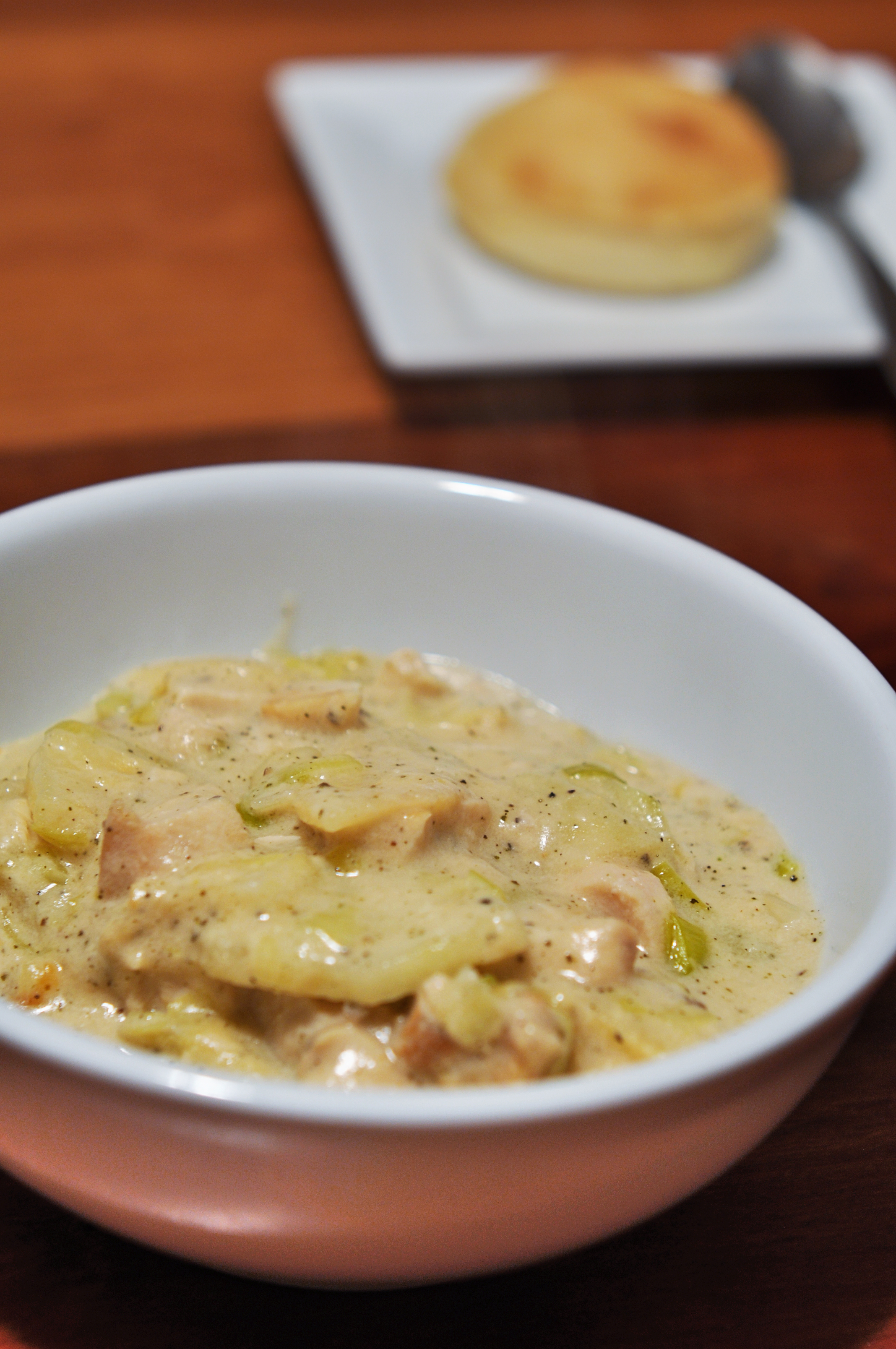
Today we’re going on a journey of the imagination.  Look at the photo above.  Now close your eyes and imagine quick and easy drop biscuits topping that bowl of appley, chickeny goodness.  That, my friends, is some simply delicious pot pie.

Now, you may have mixed feeling about pot pie.  Those frozen hockey pucks with cardboard crusts and thin, bland filling.  Dear friends, make no mistake, that is not potpie.  If the prepackaged variety is all you’ve ever known, this recipe may change your mind, and your life.

Before you start saying “I can’t make potpie, it takes too much time” or “I love potpie but I have an irrational fear of making dough”, take a moment.  Imagine a potpie that doesn’t require a rolled crust or an all day commitment.  Does that sound too good to be true?  Believe me when I say that it’s for real.

If one recipe could justify the purchase of a cookbook, this is it.  Because if you never made anything else from Pam Anderson’s Perfect One Dish Dinners, her Chicken Pot Pie alone is worth the list price.  With a minimal number of ingredients and the tiniest amount of effort, you too can enjoy potpie as it should be.  Rich and creamy, hearty and filling, in no time flat.  Just imagine the possibilities.

Chicken Pot Pie

Adapted from Pam Anderson’s Perfect One Dish Dinners

BAH Note: I halved the amount of chicken Pam calls for in her recipe because I prefer a high ratio of sauce to chicken in my potpies.  But that’s just me.  I also reduced the amount of flour in the sauce by half because I kept ending up with lumps.  That could have just been me also.  Please don’t be tempted to substitute onions for the leeks.  It just won’t be a good trade off.  I was quite wary of the leek for the longest time…until I used them in this recipe.  What I learned is that the leeks provide a subtle flavor and are the perfect complement to the apple and sage.  I also learned that when you don’t have the ingredients on hand to make the quick drop biscuit topping, you leave it off and call it Chicken Stew. I made this in a 5.5 quart dutch oven.  You could also bake it up in a 9×13 baking dish or two 9 inch pie plates, but I like keeping the number of dirty pans to a minimum.

BAH Tip: Leeks are deceptive.  They may look clean on the outside while the inside is full of gritty sand.  You don’t want that in your dish.  To remove the sand, cut the dark green tops off the leeks and then slice the leeks in half lengthwise.  If there isn’t much sand inside, place the halves under running water and separate the layers to rinse the sand away.  For particularly sandy leeks, fill a large mixing bowl with water, slice the halved leeks, and place the slices into the water.  Use your hands to swish the slices around so that the sand falls to the bottom of your bowl.  Use a slotted spoon or your hands to carefully remove the leek slices from the water, leaving the gritty sand in the bowl.

Base

  • 2 cups chicken broth
  • 12 ounces evaporated milk
  • 6 tablespoons butter, divided
  • 2 large leeks, washed thoroughly (see tip above), light green and white parts only, chopped
  • 2 large apples, quartered, cored, and sliced thinly (Granny Smith is especially nice for this)
  • 2 to 3 cups of shredded rotisserie chicken or turkey
  • 1/4 cup plus 1 tablespoon flour
  • 2 teaspoons dried sage

Biscuits

  • 2 cups all purpose flour
  • 2 teaspoons baking powder
  • 1/4 teaspoon baking soda
  • 3/4 teaspoon salt
  • 3/4 cup grated sharp cheddar cheese
  • 1 stick of butter, frozen
  • 1 cup buttermilk, cold

Place oven rack in lower middle position and heat oven to 400 degrees.

Microwave the chicken broth and evaporated milk in a large microwave safe bowl for 3 to 4 minutes until it is just steamy.

Melt 2 tablespoons butter in a dutch oven over medium high heat.  Add the leeks and apples and cook for 7 to 10 minutes until they are just tender.  Transfer the leek and apple mixture to a large bowl.  Add the shredded chicken or turkey to the bowl and set it aside.

Melt the remaining 4 tablespoons of butter in the now empty skillet set over medium heat.  When the foaming subsides, whisk in the flour and sage and cook for 1 to 2 minutes until golden.  Slowly add the warmed milk, whisking until smooth, and simmer, stirring constantly, until the sauce thickens.  Add the chicken mixture back to the pot and stir until it is combined.  Taste for seasoning and add salt and pepper to taste.  Top with biscuits and bake until the biscuits are golden brown and the filling bubbles, approximately 30 to 35 minutes.

To make the biscuit topping, whisk together the flour, baking powder, baking soda, salt, and cheddar cheese in a medium bowl.  Using the coarse side of a box grater, carefully grate the frozen butter into the flour mixture and mix quickly with your fingertips to blend evenly.  Mix the buttermilk into the dry ingredients with a fork until the dough just comes together.  Use your fingers to pinch small rounds of dough and place on top of the filling.

{printable recipe}

Semi Homemade

semi-homemade-collage

The following originally appeared on 5/20/09 at Exit 51.

Semi Homemade

I don’t understand people’s obsession with homemade tomato sauce.  Never have.  When I make sauce from scratch, I end up feeling that my time has been wasted and I should have just opened a jar instead.  Especially meat sauce.  For years, and I do mean many years, I convinced myself that I could not make meat sauce.  Because even when I started with jarred sauce and added ground beef, the results were dismal. Instead of being velvety and rich, I would end up with a greasy, thick sauce that had big chunks of tough ground beef.  It was more Sloppy Joe than spaghetti sauce.  Definitely not what I was going for.  And then Cook’s Illustrated showed me the error of my ways.

As it turns out, I was missing a crucial step in the process.  Namely, the food processor.  Not to get too technical, but the reason the ground beef was always tough and dry was that the cooking process squeezed every bit of goodness out of even the chuckiest ground chuck.  The solution was to insulate the ground beef with a mixture of bread and milk, called a panade.  Crazy right?  Here, I’ll let them explain it:

“What is a panade and what do you use it for? A panade is a paste of milk and bread that is typically used to help foods like meatballs and meatloaf hold their shape and moisture. Starches from the bread absorb liquid from the milk to form a gel that coats and lubricates the protein molecules in the meat, much in the same way as fat, keeping them moist and preventing them from linking together to form a tough matrix. Mixing the beef and panade in a food processor helps to ensure that the starch is well dispersed so that all the meat reaps its benefits.”

Sure enough, the addition of milk and bread to the ground beef worked like magic.   I began making the most fantastic meat sauce, even with really lean (93%) ground beef.  Incroyable!!

Yes, this method does require you to get the food processor dirty.  But I promise you, it will be worth it.  And once you master the technique, don’t be surprised if you find yourself making double batches so that you have sauce waiting at your beck and call in the freezer.

Like I said, I don’t understand all the to do over homemade sauce.  Being utterly shameless, I am perfectly happy to take a jarred sauce that I like and tinker with it.  If Sandra Lee can build an entire career out of the Semi Homemade approach, I can certainly use the philosophy so that my whole wheat ziti is not sitting naked on the plate.

Semi Homemade Meat Sauce

Science courtesy of Cook’s Illustrated

  • 2 jars spaghetti sauce
  • 1 pound lean ground beef (85% to 93% should work well)
  • 1 slice white bread, torn into quarters
  • 2 tablespoons milk
  • 1 shallot (optional)

Put shallot, bread, and milk into food processor and pulse until paste forms.  The milk and bread will combine completely and stick to the sides of the food processor work bowl.  If your panade is on the dry side, add more milk a teaspoon at a time until the paste forms.

Add the ground beef and pulse until the mixture is well combined.  It will look mushy and pasty, that’s ok.

Heat a dutch oven or large saucepan over medium-high heat and add groundbeef.  Cook, breaking meat into small pieces with a wooden spoon or spatula, until beef loses its raw color, anywhere from 2 to 4 minutes (or slightly more) just make sure that meat does not brown.

Stir in the spaghetti sauce, cover, and gently simmer 10 to 15 minutes, stirring occasionally, for flavors to combine.  Add salt, pepper, and any other herbs to taste.  If you have some balsamic vinegar or red wine, consider adding a bit to the sauce as it simmers.

Serve with your favorite pasta and freeze the leftover sauce, that is if you can keep yourself from sopping it all up with chunks of hearty bread.

Rushed

Mustard Roasted Shrimp

The following originally appeared on 5/27/09 at Exit 51.

Rushed

Despite my best efforts to the contrary, there are just days when time is not on my side.  I’ve got too much to do and not enough time to get it done.  Or cosmic forces conspire against me and suck huge chunks of time out of my grasping hands, never to be seen again.  A trip to the grocery store that should take 30 minutes turns into an hour.  Too bad life doesn’t come with rollover minutes, like in the AT&T commercial.  I’d definitely pay for that upgrade.

The problem with poor time management is that something ultimately suffers.  You cut corners, trying to wedge a square peg into a round hole, and the end result isn’t exactly the right fit.  It will do in a pinch but you know you could do better.  That’s how I feel about Mustard Roasted Shrimp.

The clock was already ticking when I set out to make the shrimp.  Dinner had to be done and I had to be out the door in little more than an hour.  So the notion of marinating the shrimp in mustard, olive oil, and tarragon for an hour in the fridge was immediately dismissed.  And soaking bamboo skewers so that the shrimp could be  broiled?  That would have to wait for another day.  These need to be in the oven NOW.

Did you ever notice that when you’re trying to hurry, even the simplest tasks get complicated?  Like peeling shrimp.  Sure, the package says EZ Peel but should it really take twenty minutes to peel two pounds of large shrimp?  In tv land there would be an assistant to instantly transform them into peeled and cleaned morsels.  In my kitchen, there’s just the cat sitting there looking mildly interested in me dropping one of those morsels on the floor.

By now, my hour is down to about 40 minutes.  Sorry shrimp but the best I can offer you at this point is a short stay in the marinade out on the counter.  The oven gets heated, sheet pans get prepped, and the timer ticks down to less than 30 minutes.

Finally, the shrimp go in the oven.  At this point, I stop looking at the clock.  It will take as long as it takes and since my superpower to stop time has yet to develop, clock watching isn’t going to do me any good.  As soon as I start to smell the aroma of hot mustard, it’s time to turn the shrimp over.  Tick-tock, tick-tock, I can’t turn the clock in my head off.

At last the shrimp is bright pink and the mustard marinade is just starting to brown on the sheet pans; time to come out of the oven.  Sprinkle a quick pinch of salt and onto the plate we go.  In the five minutes or so that I have to actually eat, I keep thinking how this is ok but it could be so much better.  Each bite mocks me with flat flavor.  Even the next day, the leftovers lay there on the plate, not living up to their full potential because of me.

I take full responsibility.  I rushed what could have been a very good thing.

Broiled Shrimp with Mustard and Tarragon

Adapted from Bon Appetit: Fast, Easy, Fresh

  • 1/3 cup dijon mustard
  • 3 tablespoons olive oil
  • 1 green onion, minced
  • 1 1/2 tablespoons minced fresh tarragon
  • 1 1/2 pounds raw shrimp, peeled and deveined
  • 8 wood skewers, soaked for 30 minutes

Whisk first four ingredients in a medium bowl to combine.  Add shrimp; toss to coat.  Chill 1 to 3 hours.

Heat broiler and line sheet pan with foil.  Thread shrimp onto skewers.  Season with salt and pepper.

Broil shrimp until cooked through, approximately 2 minutes per side.

BAH Note: I’m including the comments from the original post as well.

on 2 June 2009 at 6:13 pm missmobtown said:
I blame Bon Appetit — labeling something as “fast, easy, fresh” when it needs to sit for an hour? Or three? Come ON.

on 3 June 2009 at 7:04 am pmf1852 said:
Indeed, not the quickest meal in the book. We made it again last weekend. Oddly enough, letting it sit longer really didn’t make it taste much different. I think the key is to definitely cook it with high heat. I may have to get over my fear of the broiler and see if that turns up the flavor.

on 27 July 2009 at 8:28 pm Lara said:
Ok, I tried this tonight and both my husband and I thought it was very good but the flavor almost overpowering. Next time I will use less mustard and perhaps half of the marinade recipe. A good make ahead and a great little appy!

on 28 July 2009 at 6:59 am Wendi said:
Would you say it’s a happy appy? Definitely play around with the ingredients to get the taste you like best.

Real Simple

Real Simple

The following appeared on 6/3/09 at Exit 51.

Real Simple

I love the idea of leading a simple life.  I just wish I could figure out how to go about doing that.  If you have any suggestions, I’d love to hear them.  Sure, there is an entire industry of lifestyle guides and magazines that want you to think that if you buy their products then your life can be as perfect as their glossy magazine photos.  Call me a cynic, but I don’t buy into that. I don’t see how stimulating the economy by buying their stuff is going to change my life.  In a recent moment of ‘what the heck was I thinking’ I grabbed one of those magazines while I was in line at the grocery store.  The only thing I saved was a recipe.

The one area where I do find ways to simplify is cooking.  Because until I learn the secrets to lead the simple life, cooking is the one thing that must be flexible, to fit into my schedule instead of making my schedule accommodate it.  Occasionally, let’s call it rarely, I will go all out on a dish that requires constant tending and fussing.  But I don’t really enjoy that.  It’s no fun for me to stand at the stove counting minutes.  I’d rather set it, and forget it.

So it should be no surprise that I tend to gravitate towards recipes that don’t chain me to the stove.  Especially when the temperatures soar into the 90’s and our entire house turns into an oven, like it did recently.  Despite the ungodly heat, I fired up the oven to 400 degrees for a real simple dinner.  And then I promptly stationed myself on the sofa where I could pretend that the hot air coming from the fan was in fact a delightful spring breeze.  What can I say, sometimes the simple life ain’t so simple.

What is pretty simple, though, is this recipe for Maple Roasted Chicken.  Instead of cut up chicken parts, I used thighs only.  And even though I removed the skin from half of them, there was still a lot of accumulated juices.  Next time, I will make sure all my chicken is naked because all that juice made the sweet potatoes too mushy.  But I bet when we go to eat the leftovers, the defatted juices will make a lovely jus.  How simple is that?

Real Simple Maple Roasted Chicken with Sweet Potatoes

From Real Simple Magazine

  • 2 small sweet potatoes, cut into 1 inch chunks
  • 1 onion, cut into 1 inch wedges
  • 6 sprigs fresh thyme
  • 2 tablespoons olive oil
  • 3 1/2 to 4 pound chicken, cut into 8 pieces
  • 3 tablespoons maple syrup

Heat oven to 400 degrees.  Place sweet potatoes, thyme, and onion in a 9×13 baking dish.  Coat with the olive oil and season with salt and pepper.

Pat chicken pieces dry, season with salt and pepper, and place in the baking dish.

Drizzle the maple syrup over chicken and vegetables.

Roast 55 to 65 minutes, until chicken is cooked through.

Food Memories – Grandma’s Wontons

This summer the Universe brought Lan from Angry Asian Creations into my world.  I forget the exact circumstances but it didn’t take me long to get AAC loaded into my Google Reader and start chatting with Lan via email about getting together in real life.  Having spent time with her, I would like to thank the Universe for using her influence to ever so slyly push me back towards my Bread Bible Studies.  Had we been in school together, I have a feeling that Lan and I would have been thick as thieves.  She tells it like it is and knows how to have a good time.  Check out her Live It List…inspiring.  And for the record Lan, I can totally help you out with #18.

I have a special place in my heart for Grandma’s and stories about how they love on us so when Lan offered me this story for her Food Memory, I jumped on it.  This originally appeared on Angry Asian Creations on 14 September 2009 and I’m glad to have the opportunity to share it with you here.

Comfort In A Bowl – Grandma’s Wonton Soup

did i ever tell you the story of when, at the age of 8, i ate 24 of my grandmother’s wonton dumplings? no? well allow me. 24 may not seem like a lot, or maybe it does, but at the time, i was a scrawny little shit, shorter than most of my classmates and while i never went to bed hungry, i can’t imagine it was cheap keeping me fed. i wasn’t aware of all the details, but i do recall grandmother counting pennies for my lunch money everyday and that is why she holds such prime real estate in my heart.

what i recall of that day is that grandma put a bowl of hot soup in front of me, heaping with wonton dumplings, the wrappers slick but at the same time wrinkly, clinging to the meat filling. and every time i emptied my bowl with a declaration that i wanted more, she would smile and make me more. for awhile, rather than extolling my grades (because back then, i really was a good student) or pimping my dance moves (Michael Jackson had nothing on me), she would tell anybody and everybody that i ate 24 of her wonton dumplings in one sitting. a pat on my head would follow. rather than be embarrassed, i would be comforted. yet another thing grandma was proud of me for, eating an assload of her food, something so easy and so damn good.

so when last weekend i felt like ass warmed over, i wanted comfort food. something to warm my very being, something that could possibly put more spring in my step. i spent all day saturday not only working on my DB challenge and a homemade chili concoction, i made grandma’s wonton dumplings. it is unbelievable and magical to me that despite how much my head and stomach hurt, i was able to stand in my kitchen all day and prepare this comfort food. because let me tell you, wrapping dumplings takes a hot minute! i meant it when i said on twitter that cooking/baking is such a balm for anything, especially when the end result brought such comfort to my sick body.

Grandma’s Wonton Soup
adapted from memory

*again, i don’t have exact measurements, i dumped a lot of stuff in a bowl

  • Wonton wrappers
  • about 1 lb ground pork
  • wood ear fungus, rehydrated in hot water, roughly chopped
  • 1 medium onion, diced
  • 2 cloves of garlic, finely diced
  • some vermicelli noodles, hydrated in hot water, roughly chopped
  • fish sauce to taste
  • 4oz pate
  • homemade chicken stock (really, you can use any kind of stock you want)

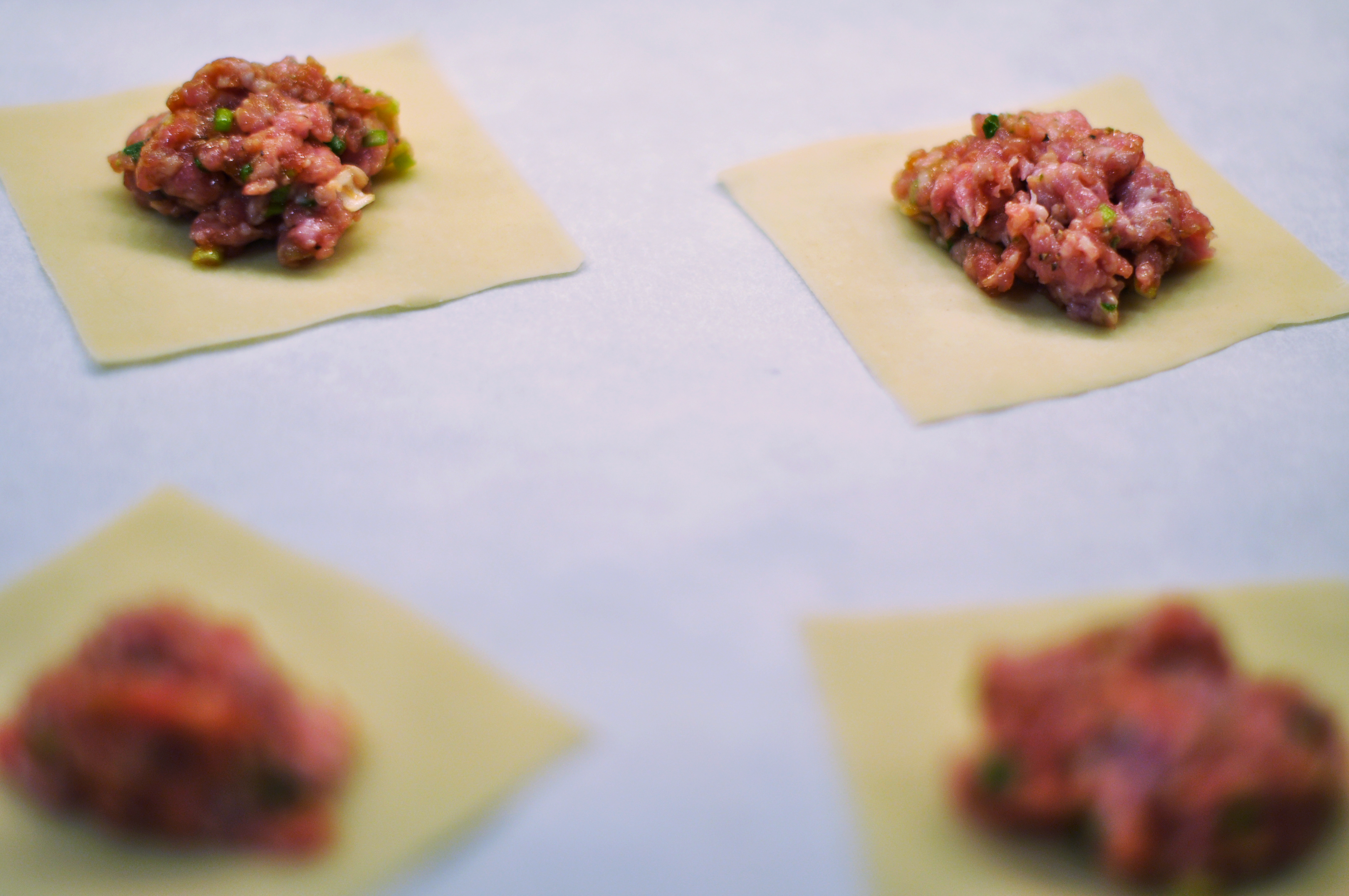
mix ground pork, fungus, onions, garlic, vermicelli, and pate together. add a dollop in the middle of wonton wrapper and make sure that you seal the meat in. i went simple and just folded the wrappers diagonally and sealed with a water/cornstarch mix. store in container covered with damp paper towel until ready to cook.

to cook, add to simmering pot of water (or stock) until wrappers are translucent. it doesn’t take long for the meat to cook thru. to serve, put in bowls and pour hot stock over dumplings. consume as is, or dipped in hoisin/chili sauce.

{printable recipe}

Michael Symon’s Mac & Cheese

Macaroni and cheese and I have a long history together. I grew up with the blue boxed variety and then moved into the realm of frozen cheesy pasta goodness.  Don’t tell anyone I told you this, but in a pinch both Stouffer’s and Trader Joe’s have a mighty fine frozen mac and cheese product.  And I suspect that someone, somewhere, has passed one of these off as homemade.  I’m not saying I’ve ever done that.  I’m just speculating that it has happened.  The thing about that is as easy as frozen mac and cheese is, homemade is not much more work.

Ask yourself these questions:

  • Can I boil water?
  • Can I carefully measure out hot cooking water?
  • Can I pour cream into a saucepan cook it down?
  • Can I shred cheese?
  • Can I mix together pasta, cream, cheese, and cooking water?

If you answered yes to all of these questions, you can make macaroni and cheese.  And not just any mac and cheese.  This is Michael Symon’s mac and cheese (MSmac).  With no disrespect to the recipes I’ve tried from Martha, Ina, and Deb, this might just be the best mac and cheese I’ve ever made.  Why is that?

First: I prefer stovetop mac and cheese over one that is oven baked. MSmac goes directly from stovetop to plate so my mac and cheese needs can be met in no more time than it takes to make the sauce and cook the pasta.

Second: I don’t want to spend $$$$ on three, four, or five different cheeses.  MSmac calls for one cheese and while it’s fancier than American or Cheddar, it won’t break the week’s food budget.

Third: MSmac has a rich, silky cheese sauce.  There are no lumps, clumps, or globs to dampen my mac and cheese enjoyment.

Fourth: MSmac has bacon.  Does that really require an explanation?

Fifth: There really isn’t a fifth reason since bacon trumps anything else I could say.

I first discovered MSmac thanks to Alice at Savory Sweet Life.  She wrote about it and I knew that it would not be long before MSmac and I found ourselves alone together.  It was our destiny to find one another across the Intewebs.  And let me tell you, destiny does not like to wait.  Now that destiny has brought me together with MSmac, I don’t know what could ever tear us apart.  This is what I want when all the little things in my day go wrong.  This is how I want to console myself when the Universe is conspiring against me.  This is my definition of comfort food.

Perhaps MSmac is right for you?

Disclaimer:  Side effects of MSmac are mild to moderate and include eating it straight from the pot and licking cheese sauce off of serving utensils.  Consult professional help for sauces requiring 30 minutes or more to reduce.

Mac & Cheese

Adapted from Chef Michael Symon

BAH Note: I’ve scaled this down because having the full recipe’s worth of this in my house is dangerous.  In my opinion, this is best served as a side so you can enjoy a smaller serving and not feel completely wicked.  But it can just as easily be your main course.  You’ll want to be sure to use a nonstick saucepan and watch your heat so that the cream doesn’t scorch or boil over.

BAH Tip:  I’m bad at guestimating when liquids have reduced, so to check I carefully poured the hot cream into a 2 cup liquid measuring cup to gauge my progress.  It’s really about the volume of the cream more than it is about how long it takes.  Just be patient and don’t rush the process.

  • 2 cups heavy cream
  • 1 tablespoon fresh rosemary, finely chopped
  • 1/4 pound bacon, fried, drained, and crumbled
  • 1/2 pound short pasta
  • 4 ounces Gruyere cheese, grated

Bring cream and rosemary to a low boil over medium heat in a large saucepan.  Keep at a low boil, stirring frequently, until reduced by half and thickened, approximately 25 minutes.

While the cream is reducing, cook the pasta according to the package directions.  Reserve 1/4 cup of the cooking liquid before draining the pasta.

When the cream has reduced, add the pasta and grated Gruyere and stir to combine.  Add pasta water until the sauce is as loose as you like.  Stir in the crumbled bacon, taste for seasoning, and add salt to taste.

{printable recipe}

Food Memories – Alice’s Tuna Casserole

Have I mentioned how much I admire Alice Currah?  Not only is she a wife and mother of three, but she also maintains two blogs (Savory Sweet Life and Everyday Alice) and is now a contributor to PBS’s Kitchen Explorers.  How she finds the time to do all these things, I will never know.  As impressive as those time management feats are, they aren’t why I admire Alice.

I admire Alice for speaking difficult truths, for honoring her own convictions, for owning her opinions, for encouraging others to follow their passions, for being both a vocal critic and an ardent cheerleader, for reminding us to be authentic, and for being one of the warmest, most welcoming people I have ever met. I truly feel lucky to have met her in person and seen the passion she has for what she does and for this community of food bloggers.

When I read her Tuna Casserole post on PBS Kitchen Explorers, I ached to have it as part of the Food Memories project.  She eloquently conveyed how her food memories played a huge role in her life.  I connected with this story in a lot of ways and I really loved how she honored her early experiences with food.  I am honored that Alice is allowing me to share it with you here.

Alice’s Tuna Casserole

Cooking and baking has always been a part of who I am.  My mother and father had to work twelve hour days to put food on the table.  Having six kids was challenging and they did their best to make sure we were clothed, fed, and had a roof over our heads.  The food wasn’t glamorous but it sustained and nourished our bodies.  My mother would often prepare a big one pot dish before leaving for work, which would be waiting for us on the stove top for dinner.  Most of the time these dishes were very basic and accompanied by warmed rice made in a rice cooker.

Although our family certainly qualified for public assistance, the prideful part of my father seemed to always override the need for more food in our cupboards.  Nevertheless we managed, partly because of my resourceful grandmother who would occasionally bring us bags of groceries she received from the local food bank; bags of canned and boxed goods in white labels with black letters.  These canned and boxed government issued foods would become my pantry, which started my love affair with cooking and baking.

I had to be resourceful, creative, and flexible – a philosophy which would apply to every aspect of my life including working in the kitchen.  My mother was not home to teach me to cook, but watching cooking shows on PBS planted seeds in my heart.  Although we never had any of the ingredients on hand to make anything I watched on television, I would experiment with what we did have on hand.  I developed my first recipe at eight years old.  I opened up a few cans of tuna, cooked some packaged pasta, stirred in some frozen peas, and mixed everything in a bath of shredded cheese, milk, mayonnaise, salt and pepper.  To top this casserole off, I crumbled Shredded Wheat cereal over a 9×13 baking dish and dinner was served.  My siblings and I devoured my no recipe-recipe and soon I was known as the cook of the family.

I learned to bake from my neighbor, Alice (I was actually named after her).  She was an elderly lady who never married and we considered her our American grandmother.  Her yard was covered in fruit trees and a vegetable garden we looked forward to eating from every time we visited. Every year she would take us kids to the local strawberry, blueberry, and raspberry farms to pick fresh seasonal fruit.  She then would bake the best pies and pastries in the world for us to enjoy.  Her love of baking and teaching was passed on to me as if I were her granddaughter, for which I will always be indebted.

Today my three beautiful children – Abbi (9), Mimi (7), and Eli (2) – and I cook and bake together all the time.  From the moment each of them was able to hold a spoon I’ve tried to teach them the basics of cooking and baking, and encouraged them to discover their own way.  They’re developing their own creative flare with what they make.  My husband Rob and I love watching them explore their potential in the kitchen, burnt cookies and all.

I’m an avid home cook and baker.  The advice, recipes, and stories I’ll be sharing with you are from everyday moments and experiences – not from culinary training or professional expertise.  I believe in being creative, resourceful, and flexible.  This is the approach I will share with you here and on my personal food blog: Savory Sweet Life.

I’m thrilled to be a weekly food contributor as part of the PBS Parents team along with my partner, Aviva Goldfarb.  I’m most looking forward to hearing your stories, recipes, tips, and ideas of food you love and how you incorporate it into your daily routine.  My hope is that we can become friends- learning and growing from each other.  I don’t have all the answers but I’m more than happy to share with you what I do know.  I also plan on reaching out to the PBS Parents Kitchen Explorers community for your ideas and perhaps even showcase them on one of my weekly posts.  I invite you to become an active participant in our newly launched community.  Together we will laugh, commiserate, and share family-friendly food our families will love and enjoy!

Reminiscent of my childhood, here’s is an updated version of my tuna noodle casserole recipe.  I hope you enjoy this recipe as much as we do!

Tuna Noodle Casserole

Reprinted with permission of Alice Currah

BAH Note:   I am a sucker for tuna noodle casserole.  It is one of my most comforting  guilty pleasures.  There, I feel much better getting that out in the open.

  • 6 oz dried curly egg noodles
  • 1 medium onion, finely chopped
  • 2 tablespoons butter
  • 8 oz package sliced mushrooms
  • 2 celery stalks, finely chopped
  • 1 teaspoon salt
  • 1 cup water
  • 2 chicken bouillon cubes
  • 1 cup whole milk
  • 2 tablespoons cornstarch
  • 8 oz package shredded medium Cheddar cheese, divided
  • 3/4 cup frozen peas
  • 2 (5-oz) cans solid white albacore tuna in water, drained
  • 1/2 teaspoon pepper
  • 1 cup potato chips, gently crushed into smaller pieces

Preheat oven to 375°F.

Cook noodles in a large pot of salted boiling water according to package directions until al dente.  Drain noodles and set aside.

Sauté onion in butter in a 12″ heavy skillet over medium heat for five minutes.  Add mushrooms, celery, and salt and cook for five minutes longer.  Stir in water and bouillon cubes.

In a small bowl, whisk milk and cornstarch until completely dissolved.  Add the milk mixture and 3/4 cup of cheese to the skillet and stir everything until well incorporated and sauce is nice and thick.

Add noodles, peas and tuna and gently fold them in. Season with pepper and additional salt to taste.  Sprinkle remaining cheese and crushed potato chips evenly on top.

Bake for 25 minutes or until golden brown on top.

{printable recipe}

Food Memories – Butternut Pear Curry Bisque

So the other week when I introduced you to Debra from SmithBites, I didn’t know at the time that she was going to become the very first Food Memory contributor with multiple entries in the project. Here’s how it happened. I badgered her until she agreed to let me use The Professor’s Black Beans and Rice in the hopes that I would move on to harassing someone else. And I did. And then I made an abrupt U turn and headed back to her inbox.

Because when I read her post about Butternut Pear Curry Bisque, it was as though the Universe had taken all the good things about Food Memories and tied them up with a pretty bow. Greedy like I am, I had to have it. Ever gracious, Debra said yes.

I would like to thank her for not changing her email address or running away screaming every time she sees my name in her inbox.  I’d also like to thank her for capturing the very essence of why I believe Food Memories are important and sharing a big bowl of it with us.

Butternut Pear Curry Bisque & Food Memories

They say a picture is worth a thousand words but I’m here to tell you that a recipe or a meal is also worth a thousand words.  For some, that dish might be a special birthday cake, cinnamon rolls or bread; to others it might be a meatloaf, pot roast or onions and garlic sauteing in a skillet.  A particular scene in Ratatouille captures this point so well – the hardened, stoic, food critic Anton Ego, takes a bite of Remy’s simple Ratatouille and the audience is immediately transported back to Ego’s childhood home where the boy Anton is served ratatouille while being comforted by his mother.

And for me, this bisque is one of those dishes.  I know it’s officially fall when The Professor breaks out the dutch oven, grabs a butternut squash from our garden and picks an armful of pears from our tree.  The first time he made this bisque, I was in Washington staying with my parents – my dad had been diagnosed with cancer a couple of months prior and I was helping them pack for a move.  I remember The Professor calling very early in the morning to tell me he had found a delicious recipe for a bisque that had pears and butternut squash in it . . . I also remember thinking that the recipe didn’t sound very appealing.  Notice I said I thought – I didn’t say I voiced my opinion – which is shocking I know, but he was cooking for me again, so don’t rock the boat, right?  (Plus, he was making his case for vegetarianism.) But I also remember coming home to this fabulous fall bisque – and The Professor has made it every single year since 2000.

In writing this post, we discovered something new about our relationship – he’s all about the tried and true familiar recipes while I’m all about flipping through my mountain of food magazines and/or cookbooks discovering unique and exciting ones.  He’s always the one to make Black Beans and Rice, grilled cheese sammies with tomato soup, scrambled eggs, grilled pizza, the Thanksgiving smoked turkey breast and this butternut pear curry bisque; he follows the recipe to. a. tee; always measuring exact amounts, never eyeballing an ingredient – meticulous and precise.  I, on the other hand, am racing through the directions, capturing the essence of a recipe and then I’m off doing my own ‘loose’ interpretation; and I have only a handful of recipes I’ve made more than once.

We’re all connected through food in one way or another; and while it would appear that The Professor and I would clash in the kitchen, we actually compliment one another.  There are times when I’m in charge and he’s the sous chef; then he’s in charge and I’m the support.  That is the dance.  That is the magic.  And that is how all of us create our own individual memories and stories.

What favorite food takes you back to a particular memory?

BUTTERNUT PEAR CURRY BISQUE
Cooking Light Magazine, October 2000

BAH Note: I made a few modifications to the recipe that Debra was kind enough to supply.  Since this is Debra’s memory, I’m showing the recipe she used.  But lean in and I’ll tell you what I did different.  First, I used all of pulp I got from a 3 pound squash.  I didn’t measure out exactly how many cups this was but I was happy with the results.  Next, you’ll want to remember to roast your squash cut side down.  I didn’t and had to double the oven time for my butternut.  Also, I changed up the amount of liquids.  I used a 12 ounce can of pear nectar, one can of vegetable broth, and 2 cups water.  Lastly, I didn’t have another pear to use for garnish so I improvised by crisping up some prosciutto and sprinkled it on the top like confetti.

  • 1 butternut squash (about 2 3/4 pounds)
  • 1 tablespoon butter
  • 2 cups chopped peeled Bartlett pear (about 1 pound)
  • 1 1/2 cups thinly sliced onion
  • 2 1/3 cups water
  • 1 cup pear nectar
  • 2 (14 1/2-ounce) cans vegetable broth
  • 2 1/2 teaspoons curry powder
  • 1/2 teaspoon salt
  • 1/8 teaspoon black pepper
  • 1/2 cup half-and-half
  • 1 small Bartlett pear, cored and thinly sliced

Preheat oven to 375°.

Cut squash in half lengthwise; discard seeds and membrane. Place squash halves, cut sides down, on a baking sheet; bake at 375° for 45 minutes or until tender. Cool. Peel squash; mash pulp. Set aside 3 1/2 cups pulp, reserving remaining squash for another use.

Melt butter in a large Dutch oven over medium-high heat. Add chopped pear and onion; sauté 10 minutes or until lightly browned. Add squash pulp, water, and next 5 ingredients (water through pepper). Bring to a boil; partially cover, reduce heat, and simmer 40 minutes. Place one-third of squash mixture in a blender; process until smooth. Pour puréed mixture into a large bowl; repeat procedure with remaining squash mixture. Return squash mixture to pan; stir in half-and-half. Cook over low heat 3 minutes or until thoroughly heated. Ladle soup into bowls, and garnish with pear slices.

{printable recipe}