Scharffen Berger Chocolate Pudding

Chocolate Pudding and I are no strangers. I still remember the blue/grey tupperware containers that my Grandmother only used for pudding.  Each held a single serving and had its own lid so that the dishes could be easily stacked in the refrigerator.

I also still remember that our pudding came out of a box.  It was years before I knew anything else.  In all of my pudding experiences, I have developed a preference for puddings with silky smooth texture. If I use that as my only metric, this particular pudding is not the end all be all to me.  The texture was rather thick and dense.  But it’s an alternative to other recipes that are filled with egg yolks and heavy cream, if those aren’t your thing.

Scharffen Berger Chocolate Pudding

Adapted from Scharffen Berger

BAH Note: The good folks at Scharffen Berger would like you to prepare this in a double boiler.  I didn’t have a bowl and pot available that would make a good double boiler so I decided to do it my way.  I lost track of how long it took for my pudding to set but believe me, when it happens you will know.

  • 4 tablespoons cornstarch
  • 2/3 cup sugar
  • 1/8 teaspoon salt
  • 3 cups whole milk
  • 4 ounces bittersweet chocolate, chopped
  • 1 teaspoon vanilla

Combine the cornstarch, sugar, salt, milk, and chocolate in a saucepan set over medium heat.  Cook, stirring occasionally, until the pudding thickens.  Remove from the heat and stir in the vanilla.  Transfer to a bowl, cover with plastic wrap (pressing the plastic down onto the top of the pudding), and refrigerate until thoroughly chilled.

{printable recipe}

Flashback Friday – One Pot Wonderful

Flashback Friday

The following originally appeared on 10/6/08 at Exit 51.

One Pot Wonderful

That’s what I said after I tried the Roasted Pork Tenderloin and Mushroom Marsala recipe from the Washington Post.  This recipe had everything going against it…my lack of skill in preparing pork in general and not really wanting to be cooking that evening…and it still came out a winner. The pork was tender and juicy and the mushroom marsala sauce was silky and rich.  Best of all, there was only one pot to clean up.

My only gripe is that the pork took longer than 20 minutes to reach 160 degrees.  I really don’t understand what it is about my oven that I can’t replicate these cooking times.  Since the cooking time almost doubled, I didn’t have much liquid left in the pot once it came out of the oven.  So I was able to skip the step of reducing the pan juices before adding the chicken broth and marsala.

I can definitely see this becoming a weeknight favorite, especially if I can find a way to turn it into a 30 minute meal.  But even if I can’t, it’s worth the extra oven time.

Roasted Pork Tenderloin and Mushroom Marsala

From The Washington Post

WaPo Notes: This one-pot dish has the flavor profile of classic veal Marsala but requires less prep work. It can be made with any type of mushrooms: oyster, portobello and tree ear varieties are particularly good here. Serve with steamed asparagus, roasted Brussels sprouts or sauteed summer squash and rice.

Using a large shallow nonstick braiser works best here, but a roasting pan or a deep saucepan that’s ovenproof also can be used.

  • 1 tablespoon olive or vegetable oil
  • 2 tablespoons unsalted butter
  • Salt
  • Freshly ground black pepper
  • 1 1/2 to 2 pounds pork tenderloins, trimmed of silverskin and excess fat
  • 1 pound assorted mushrooms, stemmed and cut into bite-size chunks
  • 1 medium onion, cut into 3/4-inch chunks
  • 1/2 cup dry Marsala (Sicilian dessert wine)
  • 1/2 cup low-sodium or homemade chicken broth
  • 2 tablespoons finely chopped flat-leaf parsley leaves

Preheat the oven to 375 degrees.

Heat the oil and 1 tablespoon of the butter over medium heat in a large braiser, deep saucepan or heavy roasting pan large enough to hold all the ingredients.

Season the trimmed tenderloins all over with salt and pepper, then add to the pan. (If the tenderloins are a little long for the pan, cut them in half crosswise.) Cook for 6 to 7 minutes, turning the tenderloins halfway through, so that they are browned on the bottom and top. Use tongs to transfer them to a large plate. They will not be cooked through.

Increase the heat to medium-high and add the mushrooms to the pan. Cook, stirring, for 2 to 3 minutes, then add the onion. Cook for 2 to 3 minutes, just until the onions start to soften around the edges. Season lightly with salt and pepper.

Return the pork tenderloins to the pan, which will be a little crowded, then place the pan in the oven and roast for about 20 minutes, until the internal temperature of the tenderloins registers 160 degrees.

Use tongs to transfer the tenderloins to a plate; cover loosely with aluminum foil to keep them warm.

Return the pan with the mushrooms and onions to the stove over medium-high heat. Cook for 3 to 4 minutes, until the pan juices have almost evaporated. Add the Marsala and broth; cook for 3 to 4 minutes, until the liquid has reduced by half.

Cut the remaining tablespoon of butter into several small pieces and add to the pan in several additions, stirring as the butter melts. Taste and add seasoning as needed. Remove from the heat.

Cut the tenderloins crosswise into thin slices and divide among individual plates. Top with a portion of the mushroom sauce and a sprinkling of parsley. Serve immediately.

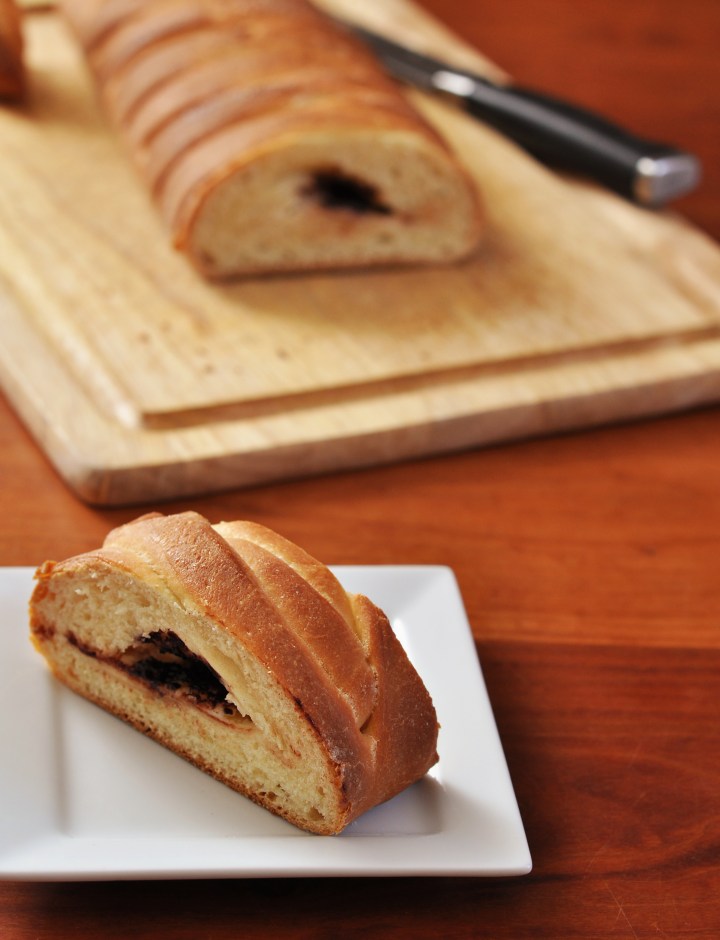
Chocolate Filled Sweet Braid

My percentages of Bread Wins have improved…but I am still far from being a competent bread maker.  More and more I get the feeling that this, in particular, is going to be a life long endeavor.  So if I embrace the philosophy that it’s a marathon and not a sprint, then I’m just happy to make it to the next mile marker.  Doesn’t really matter how many miles are behind me, I’m one step closer to the finish line.

I never would have had the courage to try Chocolate Filled Sweet Braid had it not been for two of my favorite local bloggers, Beth and Lan.  These ladies and I attended a free demonstration put on by King Arthur Flour a few months ago.  The truth is, I probably wouldn’t have gone by myself so it’s only by grace of the fact that they joined me that I went at all…I can be a little introverted that way.  If you happened to be at the Holiday Inn by MOM’S that night, we were the ones causing all kinds of trouble in the front row.  After seeing the uber talented KAF staffer breeze through the dough, I started to think maybe I could too.  I left the demo armed with a shot of confidence, a recipe, and a packet of Red Star Yeast.

Since this is me we’re talking about, you know that I had to have at least one bump in the road to Chocolate Filled Sweet Bread.  And it was a pretty big one.  Once I had done the math to scale the recipe in half and had myself all nicely mis en placed, my sponge didn’t start.  There was no bubbly action going on that I could see.  So I set that bowl aside and started again.  This time the sponge developed some lovely bubbly froth and I was in business.  Maybe the first sponge’s lack of cooperation was The Universe challenging me to see how committed I was to the task at hand.  Or maybe I just manged to mangle things.

Either way, the point is that I persevered…and I marked this particular mile with Chocolate Filled Sweet Braid.

Sweet Braid Dough

Adapted from King Arthur Flour

Sponge

  • 1 ounce unbleached all purpose flour
  • 3 ounces warm water
  • 1 teaspoon sugar
  • 1 1/2 teaspoons active dry yeast

Dough

  • all of the sponge
  • 3 ounces plain low fat yogurt or buttermilk
  • 2 ounces butter, softened
  • 1 egg
  • 1 3/4 ounces sugar
  • 1 teaspoon salt
  • 1 teaspoon vanilla or citrus zest
  • 9 to 12 ounces unbleached all purpose flour

Filling

  • 5 ounces cream cheese, at room temperature
  • 1 3/4 ounces sugar
  • 2 ounces sour cream
  • 1 teaspoon vanilla extract

To make the sponge, combine the warm water and 1 teaspoon sugar in a small bowl and stir to dissolve.  Stir in the yeast and 1/4 cup flour.  Cover with plastic wrap and set aside for about 15 minutes or until bubbly.

In a large bowl, combine the sponge, yogurt or buttermilk, butter, eggs, remaining sugar, salt, and vanilla.  Add the remaining flour 1 cup at a time, until the dough pulls away from the sides of the bowl. Once the dough pulls away from the bowl, stop adding flour. Turn the dough out onto a lightly floured counter and knead with lightly floured hands for 5 minutes until pliable and soft but not sticky.  Spray the bowl you mixed the dough in with nonstick cooking spray while you let the dough rest.  Continue to knead the dough until it is smooth and springy (if you gently make an indentation into the dough with your finger the dough will spring back).

Return the dough to the greased bowl, turn to coat it with the nonstick spray and cover the bowl with plastic wrap and a dish towel.  Let the dough sit in a warm place for approximately 1 1/2 hours or until doubled.

Gently deflate the dough and roll into a rectangle approximately 10 x 14 on a sheet of parchment paper.  Using a butter knife or plastic bench scraper, gently score the dough so that it is divided into thirds.  Be sure not to cut through the dough, you just want to mark it for reference.  Cut notches out of each of the four corners and then use your butter knife or bench scraper to cut 1″ wide strips in the two outer thirds of the dough.  The center of your dough will be “fringed” with the strips on each side.  Try to get your strips to line up as much as possible on each side.

Stir 1 tablespoon all purpose flour into half of the prepared filling and spread over the center third of the dough, leaving 1″ at the top and bottom uncovered.  Reserve the other half of the filling for another use.  Sprinkle 6 ounces chocolate chips over the filling.

Fold the top and bottom flaps down over the filling and then bring the strips of dough fringe across the filling on a diagonal, alternating from side to side.  Press and pinch each strip into the side of the dough as you go until the loaf is braided.

Brush the top of the braid with an egg wash of one egg beaten with one tablespoon water and sprinkle the top with coarse sugar.  Loosely cover the braid with plastic wrap and let rise for 30 to 45 minutes or until puffed.

While the braid rests and proofs, heat the oven to 350 degrees.  Uncover the braid and slide the sheet of parchment onto a half sheet pan. Bake for 30 to 40 minutes or until golden brown and the internal temperature registers 190 degrees on an instant read thermometer.  Transfer the braid still on the parchment to a rack to cool for 30 minutes before slicing.

{printable recipe}

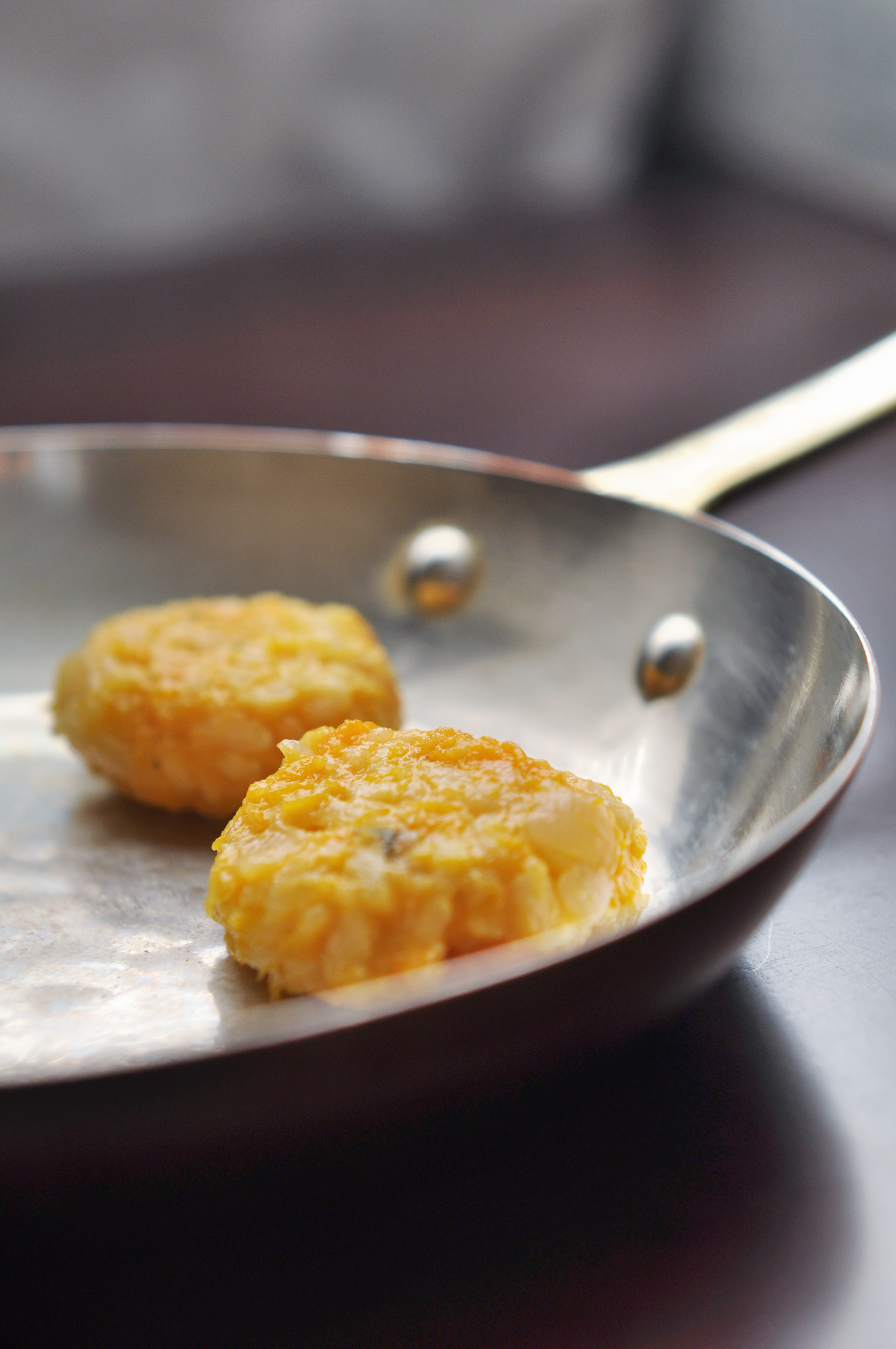
Butternut Squash Risotto

I swear that the laws and properties of physics must be suspended in test kitchens.  Because recently, I’ve been encountering recipes in magazines and cookbooks that defy these laws.  That’s really the only explanation I can come up with to explain why the Squash Risotto recipe I tore out of Bon Appetit said it would only take 8 minutes for 6 cups of cubed squash to soften on top of the stove or that I would only need 3 1/2 cups of broth to my 1 1/2 cups of arborio rice.

This recipe, my friends, was a lesson in trusting my instincts.  It was also a lesson in patience.  I’m usually pretty bad about both these things so I think maybe the Universe was trying to get my attention under the guise of creamy, tender rice and subtly sweet butternut squash.  I should have also paid better attention to how much time this recipe took me from start to finish.  While I can’t predict whether the laws of physics will be broken in your kitchen, I can say that this recipe is not what I would call a quick weeknight go to. But if you see it through to the end, you will have a fantastic main course or side dish to bring to the table.

I wish all of the Universe’s lessons tasted this good.

Butternut Squash Risotto

Adapted from Bon Appetit

BAH Note: One super easy change to BA’s recipe would be to roast the squash in the oven instead of cooking it on top of the stove.  If you do decide to roast it, go easy on the olive oil.  You’ll want the squash to incorporate into the risotto and I have no first hand experience with how a bunch of oil on your veg will impact that process.  I didn’t know what to expect from the Sherry Vinegar in the dish but it brought a subtle sweetness to the squash that was quite enjoyable.

  • 4 tablespoons olive oil, divided
  • 2 1/2 – 3 pounds butternut squash, peeled, seeded, and cut into 1/2 inch cubes
  • 1 tablespoon fresh sage, finely chopped
  • 1 tablespoon sherry wine vinegar
  • 2 medium onions, chopped (about 3 cups)
  • 3 cans vegetable broth
  • 1 1/2 cups arborio rice
  • 1 tablespoon butter, softened
  • 1/4 cup parmesan cheese, grated (optional)

Heat half the olive oil in a dutch oven over high heat.  Add the squash and a pinch of kosher salt and cook until it begins to brown, stirring occasionally.  Reduce the heat to medium,  add the sage, cover, and cook until the squash is tender, adding water or vegetable broth a 1/4 cup at a time if the pot begins to dry out.  Once the squash is tender, stir in the sherry wine vinegar and transfer the squash to a bowl.  Wipe the inside of your pot.

Heat the remaining oil in the dutch oven and cook the onion over high heat for 5 to 10 minutes.  Reduce the heat to medium, cover, and cook for 20 minutes or until the onions are tender and well browned.

While the onions cook, bring the vegetable broth to a simmer in a large saucepan.  Cover and keep warm over a low flame.

Once the onion are soft and brown, add the rice to the pot, and stir the rice so that it is coated with the oil in the pot.  Once the rice starts to become slightly translucent, ladle in 1 cup of the warm vegetable broth and stir until almost all of the liquid is absorbed.  Continue adding broth, a cup at a time, and stirring until the rice is tender and creamy.

Add the squash to the pot and stir to combine before stirring in the softened butter and parmesan cheese (if using).  Enjoy immediately.

{prntable recipe}